Web Design Is Splitting In Two. Which Half Are You?

Every year around this time, someone in web design decides it's time to write "the future of web design" post. Normally it's a list of trends. Bigger fonts. Bolder colours. Some nonsense about "immersive 3D experiences" that never actually gets built because the client's budget doesn't stretch past a homepage and a contact form.
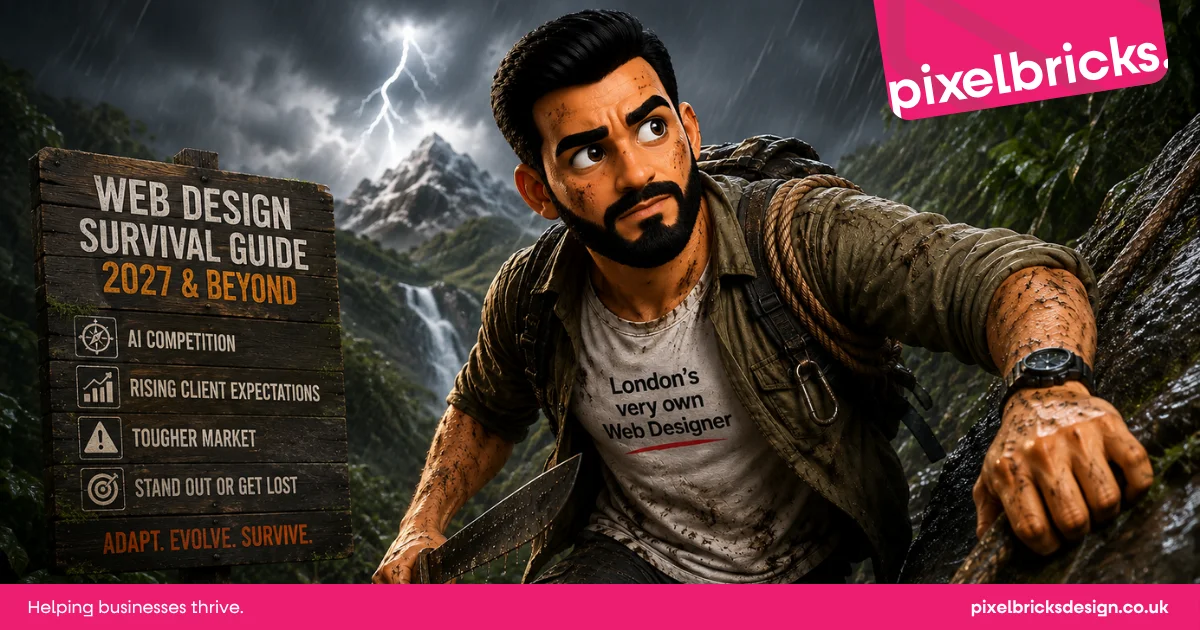
This isn't that post. Because 2026 (and 2027 at that...) doesn't feel like a trends year. It feels like a sorting year. The industry isn't getting a new look. It's splitting into two completely different jobs that happen to share the same job title.
The Production Layer Basically Runs Itself Now
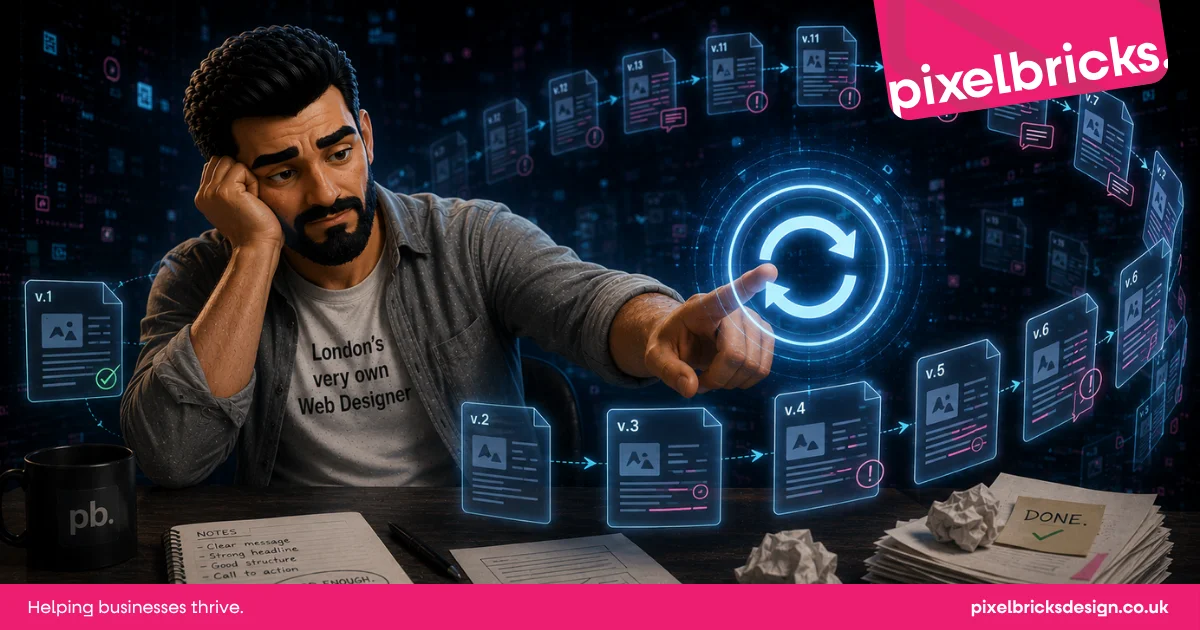
Let's not pretend otherwise. Survey after survey in 2026 says the same thing: the vast majority of designers now use AI weekly, most of them daily, and developer adoption sits even higher. Layouts, hero sections, colour palettes, boilerplate code… all of that gets generated in minutes now, not days.
That used to be the job. For a lot of "web designers", that was the entire job. Pick a template, swap the logo, adjust the colours, send an invoice. If that's genuinely all a website needed, then yes, that work is basically gone. A £20-a-month builder with an AI assistant does it faster and doesn't need paying overtime.
Reddit's been having this exact argument for months, and one line from a small business owner summed it up better than any report could: "AI killed the generic brochure site". What's actually dying is low-effort, commodity web design. Nobody's mourning that. It was never good work to begin with.
Two Jobs Hiding Inside One Job Title
Here's the split that's actually happening, and it's less about AI and more about what people were doing before AI arrived.
One group builds from a brief someone else wrote. They rarely speak to the actual business owner. They don't own the outcome, just the task. That group is getting squeezed hard, and honestly, it was always going to be the most replaceable part of this industry.
The other group does something AI still can't touch. They sit with a client and work out why visitors aren't converting. They notice that a founder tenses up every time a design leans too minimal. They know that "make it pop" means something different for every single client who says it. None of that is downloadable. It's not a prompt. It's pattern recognition built from actually doing the work, which is exactly why the designers getting replaced were never really competing with AI in the first place.
Where the Real Value Moves: Strategy, Conversion, Interactivity
If production is commodified, value moves upstream and outward. Three places specifically.
Strategy first.
Understanding a specific business well enough to know what a visitor actually needs to see, in what order, to trust them with money. AI can generate a homepage. It cannot sit in a room and notice that a client keeps saying "premium" while pointing at things that are really about status.
Conversion second.
Not a vague sense of "good design", but actually knowing why a checkout flow leaks users at step two, or why a pricing page gets traffic and no enquiries. This is measurable, testable work, and it's exactly where most websites are quietly failing right now.
Interactivity third, and this one's underrated. AI-built sites tend to converge on the same safe layout. Rounded cards, soft shadows, a two column grid you've seen forty times this month. A site that actually responds to what a visitor does, rather than just sitting there looking pleasant, is a genuinely harder problem, and it's becoming one of the few visible signals that a human actually thought about the experience rather than generating the median version of one.
What Reddit Actually Thinks, Not What LinkedIn Thinks
LinkedIn's version of this conversation is a robot arm holding a paintbrush and a caption about the death of creativity. Reddit's version is more useful, mostly because it's written by people actually running small web design businesses rather than people trying to get a repost.
The most honest comment on the whole topic came from someone building a web design business right now, who put it plainly: "the people still succeeding in this industry aren't selling websites anymore, they're selling business outcomes." Leads, bookings, trust, speed, conversions. Nobody cares if it was built in Webflow, WordPress, or with an AI assistant helping along the way. They care whether it works...
Another commenter put it even more bluntly: "with so many genuinely bad AI-generated sites now live, good designers are needed more than ever, just to separate the useful ones from the digital wallpaper."
What This Actually Means If You're Hiring a Web Designer
If you're a small business owner reading this wondering whether it's even worth paying a real person anymore, here's the honest answer. It depends entirely on which half of the split you're hiring.
If someone's showing you a portfolio full of pretty templates and can't tell you why their designs convert, you're looking at bucket one. It might look fine. It might even be cheap. But the market's already told that group where it's heading, and your website will feel it eventually too, usually around the time your enquiries dry up and nobody can tell you why.
If someone's asking about your customers before they've opened Figma, that's the group worth paying for. That's the half of this industry that isn't going anywhere in 2026, AI or not.
Key Takeaways
Production level web design (templates, layouts, boilerplate) is genuinely being automated, and that work was never the valuable part anyway
- The industry is splitting into two jobs sharing one title: ticket takers who follow briefs, and strategists who own outcomes
- Real value in 2026 sits in three places AI still struggles with: business strategy, conversion optimisation, and genuine interactivity
- AI-built sites tend to converge on the same safe, generic look, which makes a site that actually feels different a real advantage
- Reddit's small business owners agree on one thing: nobody's buying a website anymore, they're buying leads, bookings, and trust
- When hiring a designer, ask about your customers, not your colour palette. That question tells you which half you're dealing with
FAQs About the Future of Web Design in 2026
Is AI actually replacing web designers in 2026?
Not the way LinkedIn wants you to believe. AI is replacing the production side of the job, templates, layouts, boilerplate code. The strategic side, understanding a business well enough to make a site actually convert, is still very much a human job.
What should I look for when hiring a web designer now?
Ask about your customers before you ask about colour palettes. A designer who wants to understand who's visiting your site and why they'd leave is worth paying for. One who jumps straight to templates probably isn't.
Does this mean junior designers are in trouble?
The ones only doing ticket based, template level work are feeling the squeeze first. The ones learning strategy, conversion, and how to actually talk to a client are becoming more valuable, not less.
Why does interactivity matter more now?
Because AI-generated sites tend to look the same. Rounded cards, soft shadows, the same safe layout everywhere. A site that actually responds to what a visitor does stands out simply by not being the median result of a prompt.